All guides
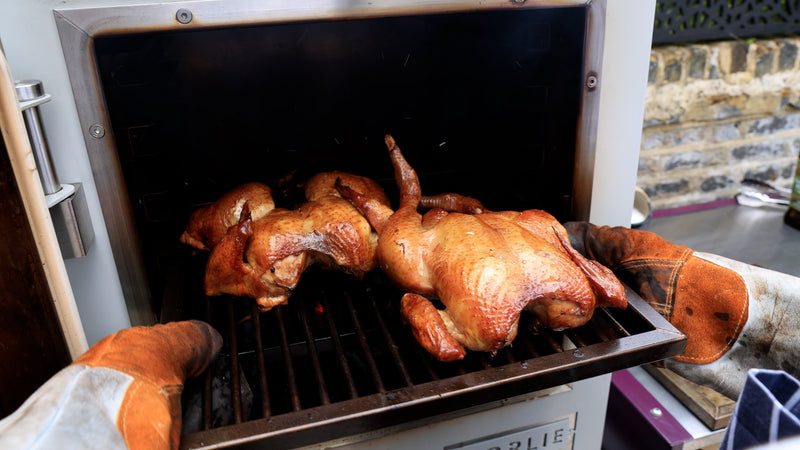
Two roast chickens coming out of a Charlie charcoal oven.

What is a charcoal oven?A live charcoal fire, built to be controlled.

A charcoal oven puts a real fire inside an insulated box and lets you decide how much of its heat reaches the food. This is how it works, and what to check before you buy one.

Neil Quick
Neil Quick
Co-founder, Charlie Oven · 12 min read · Updated 12 October 2026

The short answer

A charcoal oven is an enclosed oven heated by a charcoal fire. Air comes in low down, passes through the fire and leaves up the chimney. Because the box is closed and insulated, the heat stays around the food, so it cooks like an oven rather than a barbecue with a lid. That's why it can do so much more.

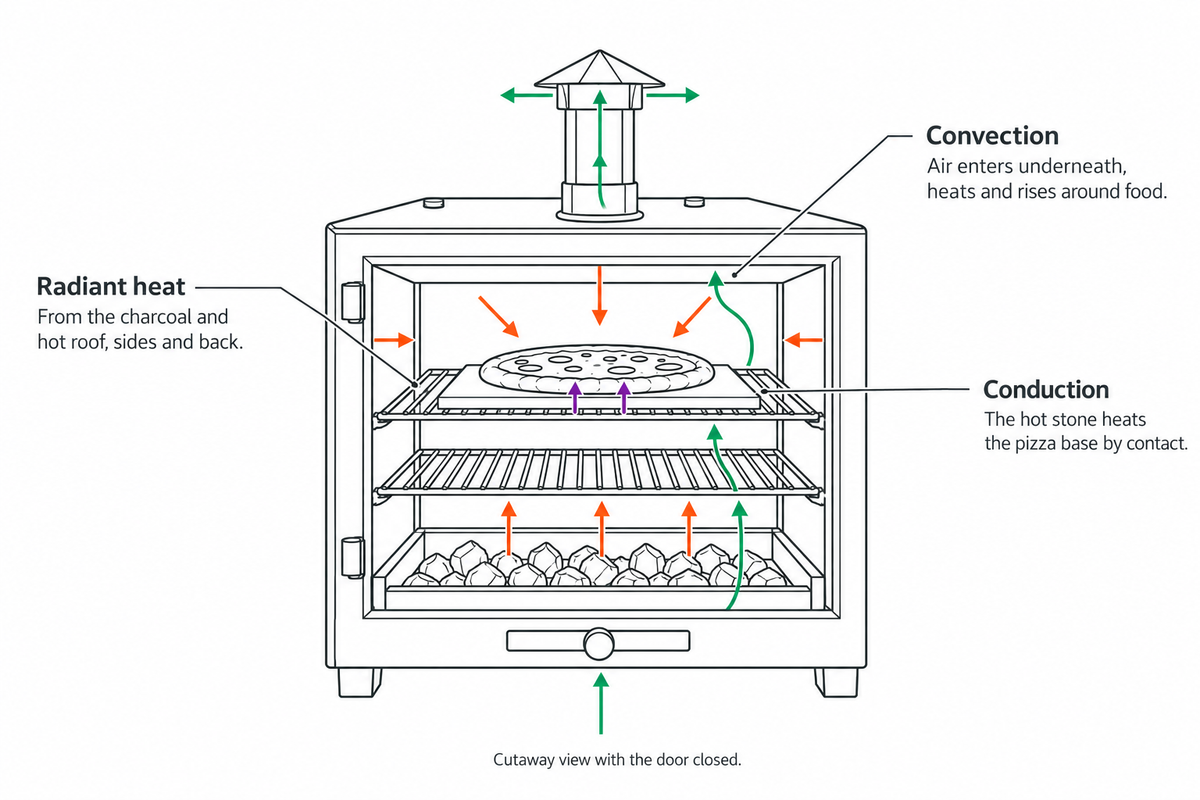
Food is heated from below by the glowing charcoal, and from all round by the walls, roof and racks giving back the heat they have soaked up.

80 to 400°C
175 to 750°F, all in one oven
9
rack positions in the Charlie Charcoal Oven
4 to 6 hours
at 200°C on half a football of charcoal
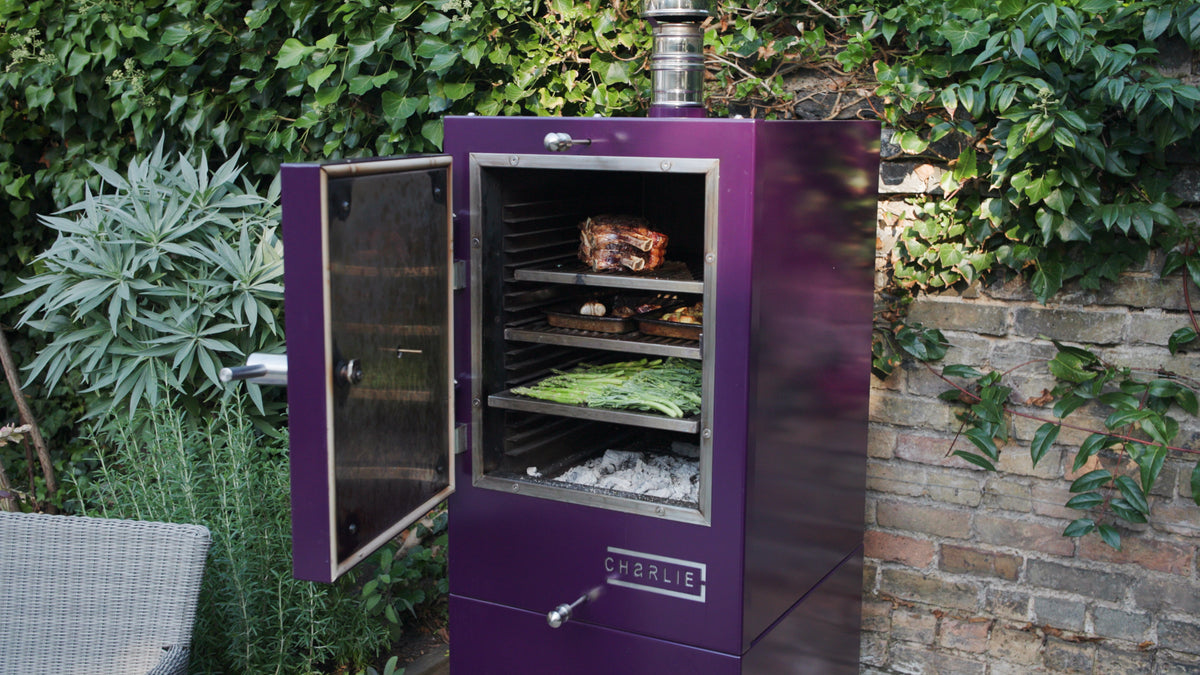
A Charlie charcoal oven in Beetroot with the door open, cooking a roast dinner on several racks at once.
A whole roast dinner in one oven, with the beef high and the potatoes below.

Where it started

Restaurants wanted lots of heat. We really wanted control.

Charcoal ovens began in professional kitchens. The brief there is usually pretty simple: get hot and stay hot through a busy service, however often the door opens.

We didn't invent the charcoal oven. But what we've spent years on is perfecting its versatility and making it dead simple to use. At home, holding 120°C (250°F) for a whole afternoon matters as much as reaching 400°C (750°F) for pizza, and so does a nice, tall chamber that lets one oven cook on several levels at once.

For instance, you might slow cook a shoulder at lunchtime and finish with pizzas in the evening, all in one oven. Funnily enough, that asks far more of an oven than a restaurant does. It's why two products, a traditional professional charcoal oven and a Charlie, can both be called charcoal ovens and cook nothing alike.

How it works

What controls the heat in a charcoal oven?

Four things decide how a charcoal oven cooks. Once you know them, one oven can cook almost anything.

01

Fuel

The amount of charcoal decides how long the fire lasts and how hot the oven can get. For 300 to 400°C (570 to 750°F), use about half as much again.

02

Air

Oxygen decides how fast the charcoal burns. Open the vents and it burns harder. Set them to the hold position and it settles and holds the temperature steady.

03

Stored heat

Once the walls and racks are hot, the oven itself cooks. The charcoal heats the oven and the oven heats the food. How well that works depends a lot on the weight of the steel, the quality of the insulation and the robustness of the construction.

04

Distance from the charcoal

Low down, food gets fierce radiant heat. Higher up, the fire's effect softens and hot air does more of the work.

Cutaway illustration of a Charlie charcoal oven showing radiant heat from the charcoal, hot air rising through the chamber and radiant heat from the hot oven surfaces.
Radiant heat from the charcoal and the hot walls, with hot air rising past the food to the chimney.

How to light a charcoal oven and control the temperature

Compared

How does a charcoal oven compare with a BBQ, kamado, smoker or pizza oven?

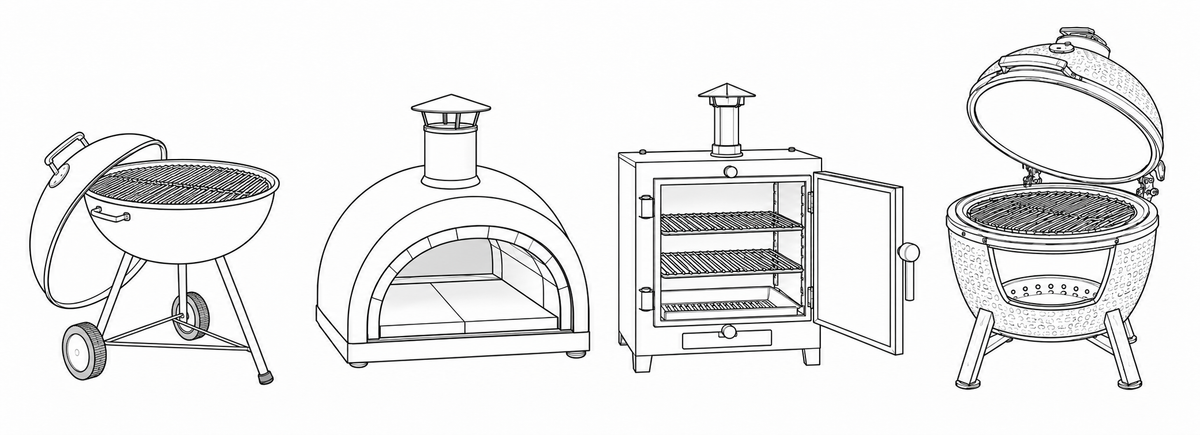
Generally, it compares brilliantly. Why? Each of these cookers moves hot air around food. The difference is where the fire sits, and what happens when you open it.

Line drawings of a kettle barbecue, a pizza oven, a front-opening charcoal oven and a kamado.
CookerWhere the fire sitsHow the air movesWhen you open itBest at
Charcoal ovenInside the chamber, at the bottomIn low, up through the charcoal, out of the chimneyThe front door opens. Roof, walls and racks stay hotGrilling, roasting, baking, smoking and pizza, on several levels. Everything, really
Kettle barbecueIn the bowl, under the grillIn through the bowl, out through the lidLifting the lid takes the top off the cookerGrilling, and indirect cooking with the lid on. Harder to hold a steady heat
KamadoIn a deep firebox under the grateIn low, out through a vent in the domeOpening the dome exposes the hottest part, so it is “burped”Low and slow, grilling on one main grate. Takes some practice to set up
Offset smokerIn a separate firebox to one sideSideways through the chamber to a chimneyThe food chamber opens away from the fireLong, smoky, indirect cooking. Not built for steaks or pizza
Pizza ovenAt the back or side of the floorAcross the curved roof, out of the mouthThe open mouth loses heat if left openVery fast, very hot pizza and flatbreads. Often only one at a time

Scroll sideways on a phone to see every column.

How a Charlie compares with a kamado

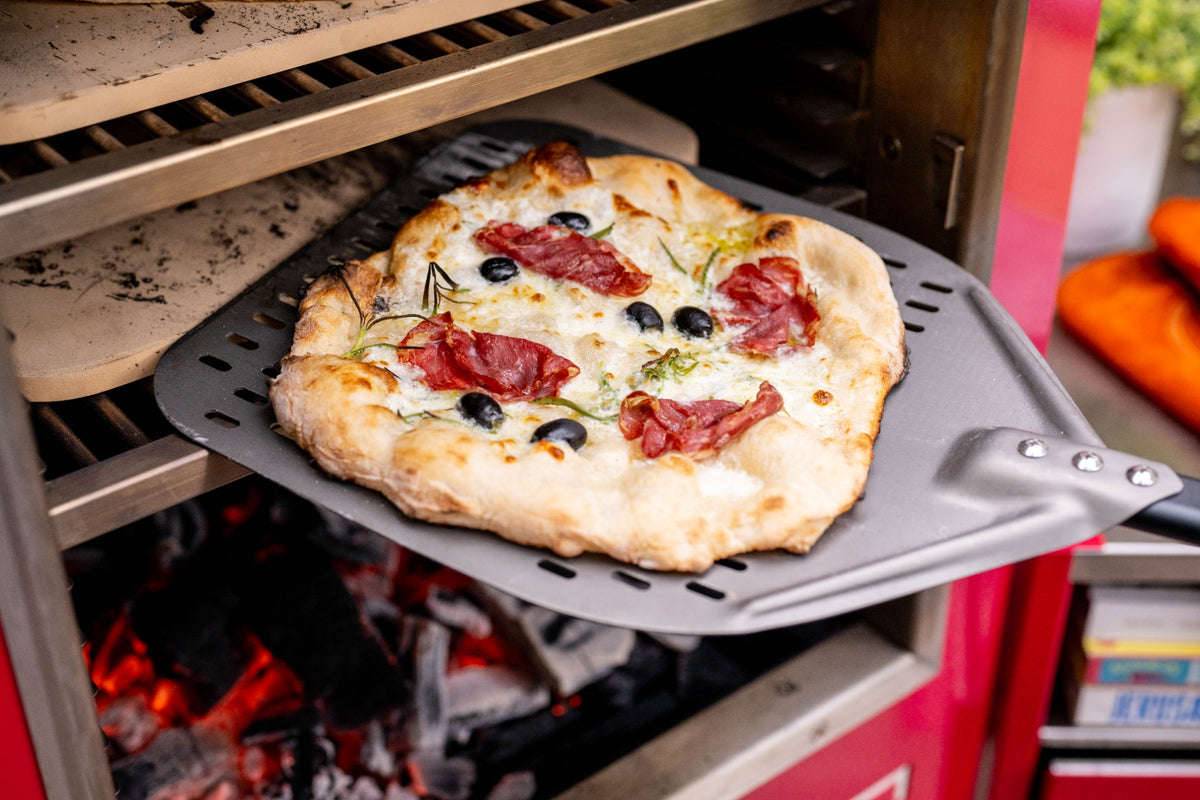
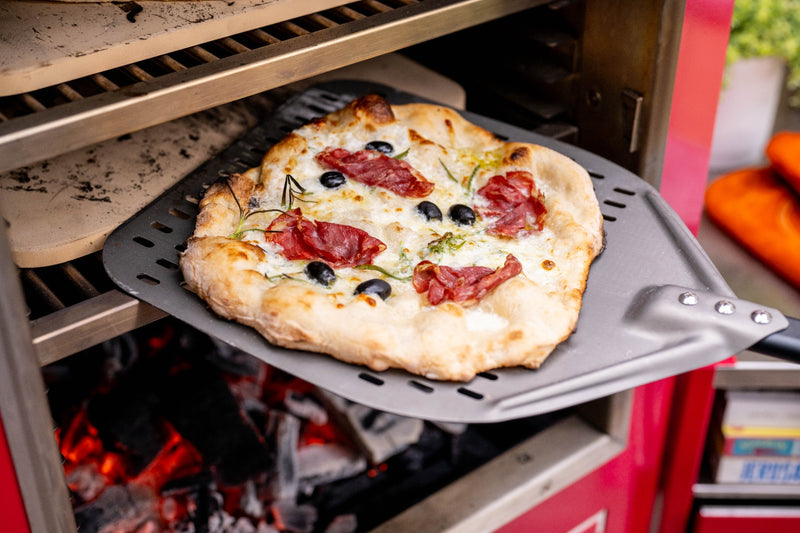
A pizza coming out of a Charlie charcoal oven on a peel, with more pizzas baking on the racks above.
Gentler
Fiercer

Cooking levels

Why do multiple cooking levels matter?

Most outdoor cookers have one main cooking surface. A charcoal oven uses its height as a control, and many racks mean a vast cooking area from a small footprint.

The Charlie Charcoal Oven has nine rack positions and the Cheeky Charlie Tabletop Oven has six, each with two racks as standard, and you can add more to make the most of it. Low down the charcoal does more of the work. Higher up, the hot air and walls take over.

So a steak can sear near the fire while a chicken roasts above it. Height isn't just extra space. It's another way to control the heat, and to cook loads of different things at once.

Temperature

What temperature does a charcoal oven reach?

The useful number isn't the maximum. It's the range an oven can hold steadily. Charlie works from 80°C to 400°C (175°F to 750°F).

Temperature guide

80 to 100°CGentle hot smoking, holding food
100 to 130°CLow and slow, long-cooked joints
130 to 180°CSlow roasting, braising, gentle baking
180 to 220°CRoasting, baking, traybakes
220 to 280°CFast roasting, grilling, crisping
375 to 400°CPizza. Never above 400°C

Fahrenheit: 175 to 210°F, 210 to 265°F, 265 to 355°F, 355 to 430°F, 430 to 535°F, 705 to 750°F.

Heating up

10 min100°C (210°F)
20 min200 to 250°C (390 to 480°F)
30 min375 to 400°C (705 to 750°F)

“Plenty of cookers get hot. The better test is whether you can control it with ease, so it sits at the temperature you set for hours without you messing around with it all afternoon.”

The 400°C limit

Why is 400°C the sensible limit for a charcoal oven?

It isn't an arbitrary number. It comes down to how steel behaves in heat, and that applies to any steel oven, not just ours. Leading professional charcoal ovens publish working ranges that top out at around 350°C (660°F).

We set Charlie's limit at 400°C (750°F) because, for 304 stainless steel, that's where the risks start to outweigh any benefit.

And nothing you cook really needs more. Perfect pizzas bake in a mere three minutes at 375 to 400°C.

The steel softens

Above 400°C, 304 stainless steel loses some of its strength, so uneven heat can bend it more easily. No one wants that.

Built-in stresses let go

Bending and welding leave stresses in any steel box. From about 400 to 500°C they start to relax, and if they relax unevenly a panel moves and stays moved. That's how an oven warps for good.

The seal has a limit too

Push a door gasket past its rating and it hardens. Once air leaks into an oven, it's harder to control.

The best measure of a charcoal oven is not its maximum temperature but how much control it gives you across the whole cook.

Neil Quick, Co-founder

How it's built

Are all charcoal ovens the same?

No. Two charcoal ovens can look alike and cook very differently. Most of the difference is in how they're built, and you can't see it in a photo.

What should you be looking for?

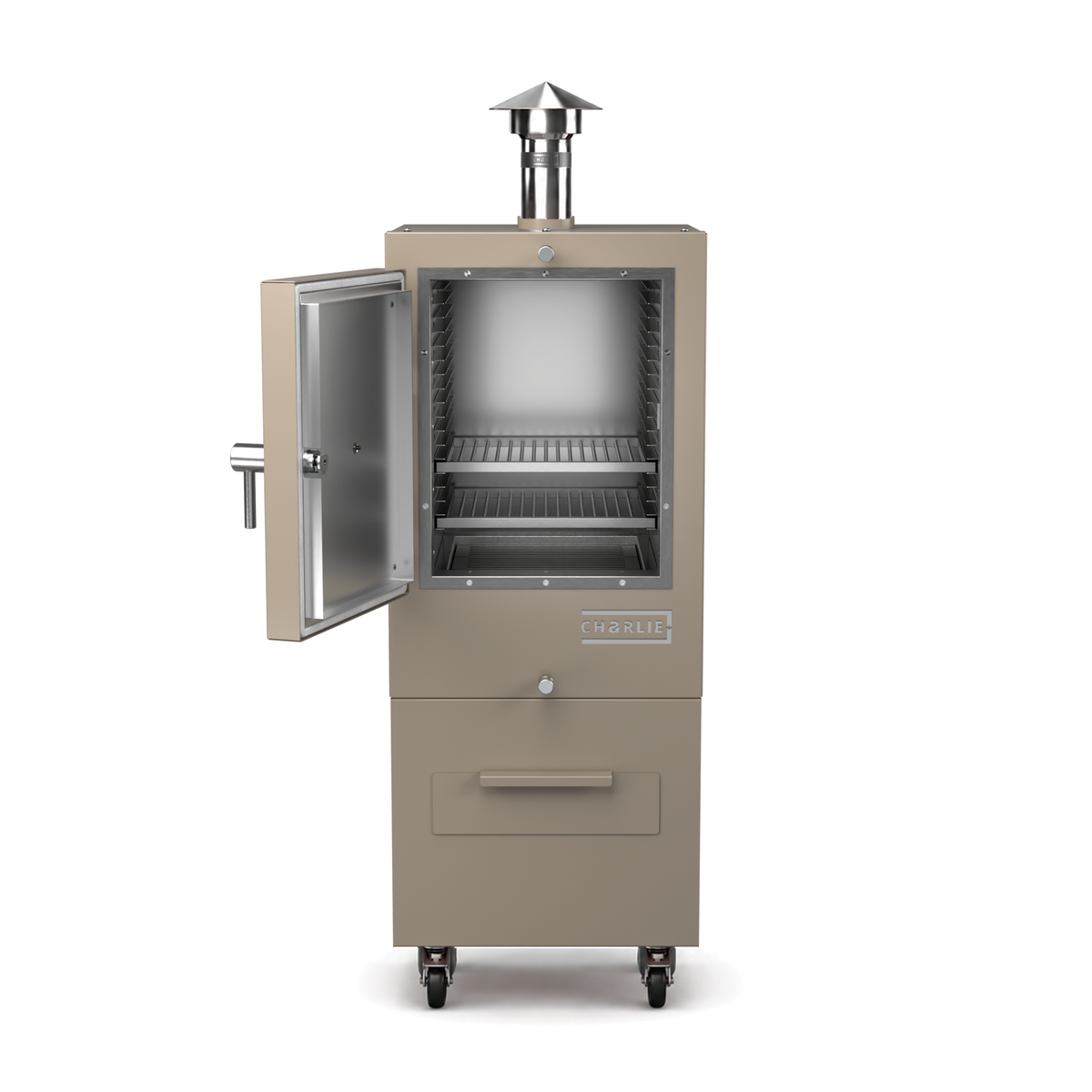
A Charlie charcoal oven in Nutmeg with the door open, showing the welded 304 stainless steel cooking chamber and rack positions.
  1. 1

    304 stainless steel

    The standard material for food equipment. No coating to burn off, resists rust, stable at high temperatures. Avoid galvanised steel in the hot parts: overheated zinc gives off harmful fumes.

  2. 2

    Steel panels at least 1.5 to 2 mm thick

    Stiffness rises with the cube of thickness, for the mathematical among us. Double it and a panel is about eight times stiffer, so it keeps its shape in uneven heat.

  3. 3

    Fully welded seams

    A 60 cm panel grows about 3 mm every cook. Screws and rivets work loose with that movement. Welds move with the box, so no gaps open up to feed the fire air you didn't set, or to let smoke out. You want welds.

  4. 4

    Ceramic wool insulation

    The material that lines kilns. Less heat lost through the walls means the fire needs less air, so small vent changes behave predictably. And the oven stays cooler on the outside.

  5. 5

    Compression latch and gasket

    A spring-loaded latch pulls the door evenly onto a high-temperature silicone gasket, which can be replaced when it wears. Solid, secure, nice.

Materials

304 stainless steel or mild steel for cooking?

In the heatMild steel, painted or galvanised304 stainless steel
Heat limitSet by the coating. Galvanised steel is only rated to about 200°C (390°F)Resists scaling in air to about 870°C (1,600°F)
OverheatedCoatings blister, and zinc can give off fumesNo coating to break down
Burning cleanRepeated high heat damages the coatingBurns clean at 400°C without harm
Food contactThe US FDA Food Code rules it out for surfaces that touch acidic foodThe standard for commercial kitchens
ExpansionExpands less as it heatsExpands more, so how it's joined matters even more
RustRusts without its coatingResists rust

For cooking outdoors, especially all year round, stainless steel is what you need. You don't want rust coming into contact with your food.

Living with one

Questions people ask before they buy

Is a charcoal oven better than gas?

Gas is quicker to start. It can't give you the flavour of fat meeting hot charcoal. A charcoal oven takes 10 to 30 minutes to heat, then holds steady for hours: half a football of lumpwood charcoal keeps Charlie at 200°C (390°F) for 4 to 6 hours. But what you get with charcoal is more flavour: that indefinable extra layer of taste that gas simply cannot deliver.

Can you use it all year round?

Yes. A closed, insulated chamber doesn't mind rain or cold. Plenty of our customers cook Christmas dinner in theirs. Outdoors only, though: burning charcoal makes carbon monoxide.

Does everything taste smoky?

No. Good lumpwood charcoal burns clean once it's going. Barbecue flavour comes partly from fat dripping onto the coals, which is why bread and pizza don't taste smoky. Want smoke? Add a small piece of dry wood.

Charcoal for heat. Wood for flavour.

How do you look after it?

To clean the inside, just run it at 400°C (750°F) for 30 minutes and food residue burns to white ash. Empty the ash drawer every 10 cooks or so, and put the racks in the dishwasher. To clean the outside, use a sponge and warm, soapy water, like your car. It comes with a 5 year warranty for home use, and parts that might wear, like the gasket, can be easily replaced.

What you can cook

What can you cook in a charcoal oven?

Almost anything you'd cook indoors or out. It's all one oven. What changes is the temperature, and where the food sits.

Browse the recipes
A pizza coming out of a Charlie charcoal oven on a peel.
Pizza at 375 to 400°C
A leg of lamb hanging over a tray of roast potatoes inside a Charlie charcoal oven.
Lamb hung above the potatoes
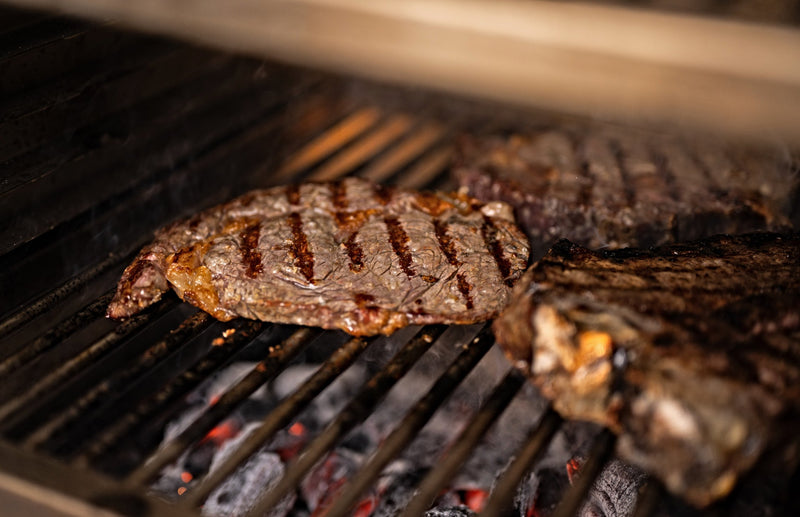
Steaks grilling on a rack close to glowing charcoal in a Charlie charcoal oven.
Steak seared on a low rack
Two roast chickens coming out of a Charlie charcoal oven.
Roast chicken on the middle racks

Before you buy

What should you look for in a charcoal oven?

The biggest number on the thermometer would be low on our list. Ask the maker these instead.

How to choose the best charcoal
Usable range
Can it hold 120°C steadily as well as run hot?
Airflow control
Can you make small, predictable changes to the temperature?
Material and thickness
304 stainless or similar? Avoid galvanised steel in the hot parts.
How it's joined
Welded seams, or screws and rivets?
Insulation
What's inside the walls? Ceramic wool is the benchmark.
Door and seal
A compression latch, and a gasket you can replace?
Height and racks
Room above the fire, and several racks in use at once?
Real fuel figures
Ask for hours per load, and at what temperature, not just “fuel efficient”.
Warranty and parts
How long, and can wearing parts be replaced?

Charcoal oven FAQs

  • Is a charcoal oven the same as a BBQ?

    No, although they overlap. A barbecue is mainly designed for grilling over charcoal. A charcoal oven puts the fire inside an enclosed, insulated chamber that holds and controls the heat, so it can also roast, bake, smoke and make pizza.

  • Are all charcoal ovens the same?

    No. Build quality changes how a charcoal oven cooks and how long it lasts. Look for 304 stainless steel rather than galvanised or painted mild steel, thick sheet that resists warping, welded seams that stay sealed through repeated heating and cooling, good insulation and a door that compresses firmly onto a heat-resistant gasket. Together these mean the vents, not leaks, control the fire.

  • How hot does a charcoal oven get?

    It depends on the design. Charlie works from 80°C to 400°C (175°F to 750°F). Never take it above 400°C, as solid fuel has no automatic cut-off.

  • Why is 400°C the sensible limit for a charcoal oven?

    It comes down to how steel behaves when it gets very hot, and that applies to any steel oven, not just ours. Most professional charcoal ovens top out at around 350°C (660°F). We set Charlie's limit at 400°C (750°F) because that is where 304 stainless steel stays reliable. Above it, the steel starts to soften, the stresses built in when the panels were formed and welded begin to relax, and uneven heat can bend a panel for good. The door seal has its own limit too. You lose nothing by stopping there: pizza bakes in about three minutes at 375 to 400°C (705 to 750°F).

  • Is a charcoal oven better than gas?

    Gas is quicker to start. Charcoal gives flavour gas cannot, from fat and juices meeting hot charcoal, and needs no gas supply. A well-sealed charcoal oven holds its temperature steadily for hours.

  • Does more charcoal make a charcoal oven hotter?

    Yes. The air reaching the fire decides how quickly it burns, and the amount of charcoal decides how long it lasts and how hot the oven can get. For 300 to 400°C (570 to 750°F), use about half as much again. To avoid overshooting a lower temperature, use less.

  • How long does the charcoal last?

    In Charlie, half a football of good lumpwood charcoal holds 200°C (390°F) for 4 to 6 hours. A full grate keeps it at 100 to 130°C (210 to 265°F) for up to 16 hours.

  • How many rack positions does a charcoal oven have?

    It varies. The Charlie Charcoal Oven has nine rack positions and the Cheeky Charlie Tabletop Oven has six. Both come with two cooking racks.

  • Can you use a charcoal oven as a smoker?

    Yes, if it can hold low temperatures reliably. Charlie cooks low and slow at 110 to 130°C (230 to 265°F), with a small piece of dry wood added when you want smoke.

  • Can you cook pizza in a charcoal oven?

    Yes, with enough heat in the chamber and in the cooking surface. We cook pizza in Charlie at 375 to 400°C (705 to 750°F) and allow the pizza stones 30 minutes to heat through.

  • Does food cooked in a charcoal oven always taste smoky?

    No. Good charcoal burns cleanly. We use charcoal for heat and add a little wood only when we want smoke.

  • Can you use a charcoal oven in the rain or in winter?

    Yes. Charlie's closed, insulated cooking chamber is not affected by rain, cold or wind.

  • How do you clean a charcoal oven?

    Run Charlie at 400°C (750°F) for 30 minutes to burn food residue to white ash, then brush it through the grates once cool. Never use water or chemicals inside. Clean the outside with a sponge and warm, soapy water.

  • Why do welded construction and a good door seal matter?

    Steel expands and contracts on every cook. Screwed or riveted joints rely on clamping pressure and can slowly work loose, opening gaps. Welded seams are continuous metal, so they stay sealed and keep the body rigid. With a well-sealed door as well, the vents are the only way air reaches the fire, so the temperature is easier to control.

  • Is galvanised steel safe in a charcoal oven?

    It is not suitable for the hot parts of one. Galvanising industry guidance gives a limit of about 200°C (390°F) for long exposure and says galvanised steel should not meet direct flame. Above that the zinc coating breaks down, and overheated zinc can give off fumes that cause metal fume fever. A charcoal oven runs up to 400°C (750°F), which is why uncoated 304 stainless steel is the better choice.

  • Can you use a charcoal oven indoors?

    No. Charlie is for outdoor use only. Burning charcoal produces carbon monoxide.

Find out more before you decide.

Explore the ovens and the outdoor kitchen online.

Good Housekeeping Best Outdoor Oven 2024 · Stocked at Harrods · Trustpilot 4.8 · Hand-built in Britain · 5 year warranty