

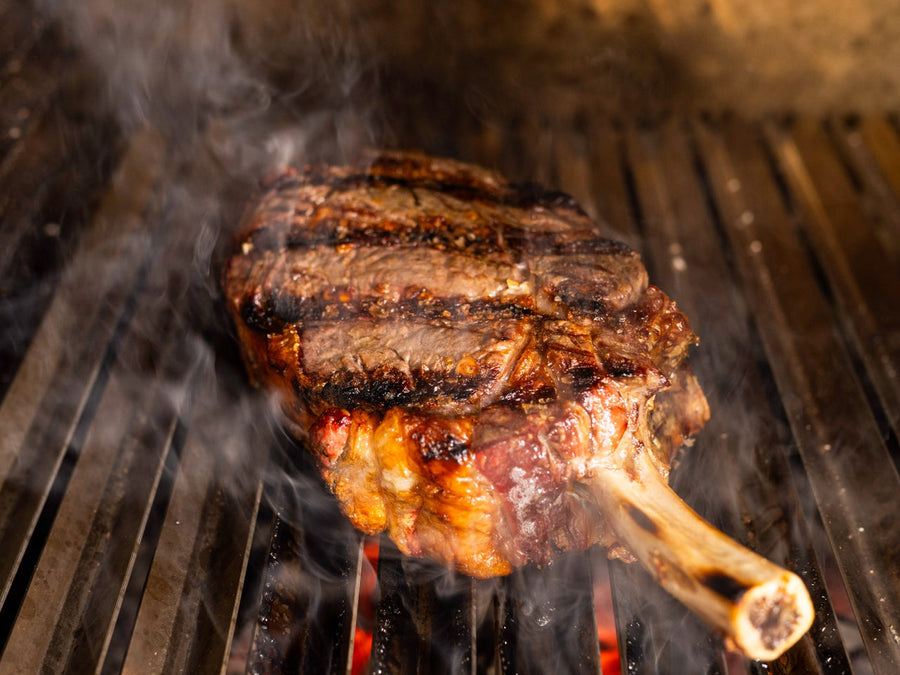
 BeefCharcoal Grilled Ribeye Steak on the Argentine GrillA thick ribeye on the bone, a hot Argentine grill and a little sea salt. That is a very...
View recipe
BeefCharcoal Grilled Ribeye Steak on the Argentine GrillA thick ribeye on the bone, a hot Argentine grill and a little sea salt. That is a very...
View recipe
Outdoor Cooking & Charcoal Oven Recipes / American

Smoked New England Fish Chowder
Andrew Dickens’ New England fish chowder brings together tender potatoes, large flakes of fish and a rich, creamy broth with a gentle lick of smoke. The fish is smoked first, then added to a cast iron pot as the chowder bubbles away in the Charlie Oven. Serve it steaming hot with fresh chives and crisp crackers crumbled over the top.
 Andrew DickensOutdoor cooking chef and presenter
Ingredients
as a starter
Serves 10 to 12Scale
For smoking
Method
Cook Mode
Stops your screen going dark while you follow along.
Prepare the potatoes and fish
- Parboil the potatoes for 5 to 10 minutes, until they are beginning to soften but still hold their shape. Drain well and set aside.
- Check the fish carefully, removing any skin and bones. Cut larger pieces into similar sizes so they cook evenly.
Set up your Charlie Oven
- Light around half a football’s worth of good-quality lumpwood charcoal. Build the fire towards the back of the Charlie Oven and bring it to 100°C (210°F).Why this mattersKeeping the fire at the back prevents the cast iron pot from sitting directly above the strongest heat. This helps stop the chowder catching later in the cook.
- Place a cooking rack in the middle of the oven.
- Line the perforated plancha with baking parchment to make cleaning easier, then pierce the paper all over so the smoke can reach the fish.
Smoke the fish
- Add one small chunk of mild smoking wood or one handful of dry wood chips to the hot charcoal. There is no need to soak the chips.
- Wait for the initial heavy smoke to clear and a thin stream of clean smoke to come from the chimney.
- Arrange the fish on the lined perforated plancha and place it on the middle rack.
- Smoke for around 20 minutes, carefully turning the fish after 10 minutes.20 min timer
- Remove the fish from the Charlie Oven and set it aside.
Make the chowder
- Open the vents and bring the Charlie Oven up to 180 to 200°C (355 to 390°F). Keep the charcoal towards the back throughout the cook.
- Put the butter and 1 tbsp neutral cooking oil into a large cast iron pot or Dutch oven. Place it on a lower rack, towards the front of the oven and away from the strongest direct heat.
- Once the butter has melted, add the onion and celery. Cook for around 5 minutes, stirring occasionally, until softened and lightly coloured.5 min timer
- Add the flour and stir well. Cook for 2 to 3 minutes, stirring regularly to cook out the flour without letting it catch.
- Carefully remove the pot from the oven. Add the potatoes, milk, cream and 500ml of the fish stock.
- Break the smoked fish into large flakes and gently fold it through the chowder.
- Return the pot to the middle rack and simmer the chowder uncovered for 20 to 30 minutes. Stir every 5 minutes, making sure the spoon reaches the bottom of the pot.
- If the chowder becomes too thick, add the remaining fish stock a little at a time until it reaches the consistency you like.
- If the base begins to catch, place a flat-bed plancha or baking tray on a rack between the charcoal and the pot to soften the direct heat.
- The chowder is ready when the potatoes are tender, the fish flakes easily and everything is piping hot.
- Taste before adding salt, as the butter and fish stock may already be seasoned. Finish with black pepper and salt as needed.
Serve
- Spoon the chowder into warm bowls and scatter over the chopped chives. Serve with salt and pepper crackers for dipping or crumbling over the top for a little crunch.
More recipes
-
 BeefCharcoal Grilled Ribeye Steak on the Argentine GrillA thick ribeye on the bone, a hot Argentine grill and a little sea salt. That is a very...
View recipe
BeefCharcoal Grilled Ribeye Steak on the Argentine GrillA thick ribeye on the bone, a hot Argentine grill and a little sea salt. That is a very...
View recipe
-
 GrillPrawns with Chilli, Garlic and LemonShell-on prawns hit the hot plancha and the smell of garlic and toasting shell drifts o...
View recipe
GrillPrawns with Chilli, Garlic and LemonShell-on prawns hit the hot plancha and the smell of garlic and toasting shell drifts o...
View recipe
-
 BakeBaked Camembert in a Brioche Bread BowlA whole Camembert tucked into buttery brioche, with garlic, rosemary, figs and Parma ha...
View recipe
BakeBaked Camembert in a Brioche Bread BowlA whole Camembert tucked into buttery brioche, with garlic, rosemary, figs and Parma ha...
View recipe
-
 RoastSeafood Paella with Prawns, Mussels and SquidWe cooked this seafood paella at Tresillian House with Spanish ingredients from Brindis...
View recipe
RoastSeafood Paella with Prawns, Mussels and SquidWe cooked this seafood paella at Tresillian House with Spanish ingredients from Brindis...
View recipe


The cook

Andrew Dickens
Outdoor cooking chef and presenter
Andrew Dickens is a live fire and BBQ expert who has taught more than 10,000 people to cook over fire. A trained BBQ pitmaster, he has cooked, taught and hosted at some of the UK’s biggest food events, as well as running live fire stages at Taste of Dubai and Abu Dhabi.
More recipes by Andrew DickensFrequently asked questions
-
Which fish works best in fish chowder?
-
How much smoking wood should I use?
-
Why use a perforated plancha?
-
Where should I place the charcoal?
-
How do I stop the chowder catching?
-
Can I make fish chowder in advance?