


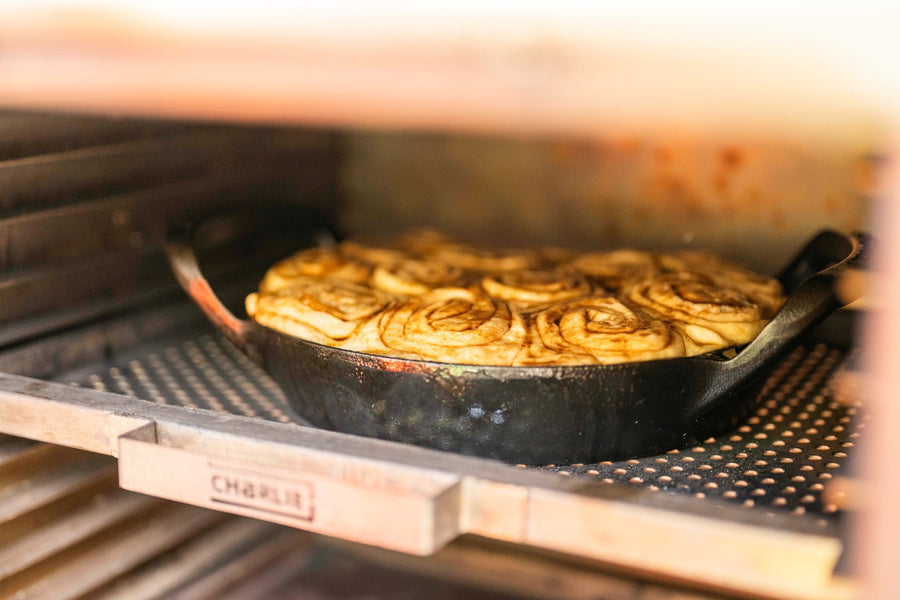
 BakeMilk Bread Cinnamon BunsSoft, pillowy milk bread wrapped around a swirl of cinnamon and brown sugar, finished w...
View recipe
BakeMilk Bread Cinnamon BunsSoft, pillowy milk bread wrapped around a swirl of cinnamon and brown sugar, finished w...
View recipe
Outdoor Cooking & Charcoal Oven Recipes / Lamb

Cooked in the Charlie Charcoal Oven
Roast Leg of Lamb with Rosemary Roast Potatoes
A hanging leg of lamb makes quite a sight in Charlie. Garlic, rosemary and a little five spice flavour the meat, while the tray below catches the drippings for gravy. Save some of the lamb fat for the roast vegetables. Nothing good gets wasted.
 Neil QuickCo-founder, Charlie Oven
Oven temperature120°C (250°F), then 200°C (390°F)
RackUpper rack for hanging the lamb, a roasting tray on the lower rack and the potatoes on the middle rack
CharcoalHalf to three quarters of a football of good quality lumpwood charcoal
Ingredients
Serves 6 to 8Scale
Equipment
Everything used in this recipe. Already have Charlie? Add the accessories in one go.
-
 Flat Bed Plancha Rack$300.00
 -
 Charlie Oven Cooking Rack$300.00
 -
 Charlie Charcoal Oven$6,400.00Choose your oven, Charlie Charcoal Oven
Method
Cook Mode
Stops your screen going dark while you follow along.
Setting up Charlie
- Pat the lamb completely dry with kitchen paper. A dry surface gives you a better deep brown finish during the long roast.
- Using a small drill bit, carefully drill a hole through the shank bone near the end. Thread a sturdy butcher’s S hook through and make sure it is secure and balanced.
- Mix plenty of sea salt with the five spice powder. Season the lamb all over and be confident with it.
- Using a small knife, make small, deep pockets across the meat. Push in garlic cloves and short sprigs of rosemary. Do not overdo the cuts. Just enough to carry flavour into the leg.
- Leave the lamb at room temperature for a full hour before cooking.
- Place the charcoal directly onto the fire grates, towards the back of the oven.
- Light the charcoal and bring the oven to 120°C (250°F). You do not need to wait for the charcoal to burn down to embers.
- Just shy of the target temperature, close both vents to one inch open.
- Add one small palm-sized chunk of oak directly onto the hot coals, then add the dry rosemary sprigs and bay leaves straight onto the coals.
- Slide the Charlie roasting tray onto a lower rack so it sits directly beneath where the lamb will hang.
- Add the onions, carrots, celery, dried oregano, bay leaves and 200 ml water to the tray.
- Hang the lamb from the top rack position so it sits centrally and clear of the fire, completely exposed above the tray.
- Close the oven and keep it closed as much as possible.
- Cook at 120°C (250°F) for 4 to 6 hours, basting every hour with the juices from the tray below. If the tray looks dry, add a splash more water.
- Lift the lamb out and rest it lightly covered for at least 45 minutes, up to 1 hour.
- While it rests, open the vents fully and, if needed, add a little more charcoal to bring the oven up to 200°C (390°F). Just shy of the target temperature, close both vents to one inch open.
- Carefully remove the roasting tray. Spoon off and reserve the clear lamb fat from the top.
- Strain and press the vegetables, bay and juices to create the base of your gravy. Reduce in a pan if you want a richer finish.
- Toss the parboiled potatoes and whole carrots in the reserved lamb fat. Add the halved head of garlic and 4 extra fresh rosemary sprigs. Season well. Allow 120g of reserved lamb fat for the 1.5kg potatoes and 750g carrots combined, topping up only if required.
- Return everything to the roasting tray and place it back into the oven on a middle rack at 200°C (390°F).
- Roast for 45 minutes to 1 hour until the potatoes are crisp, golden and edged with sticky garlic and rosemary.
Tips
More recipes
-
 BakeMilk Bread Cinnamon BunsSoft, pillowy milk bread wrapped around a swirl of cinnamon and brown sugar, finished w...
View recipe
BakeMilk Bread Cinnamon BunsSoft, pillowy milk bread wrapped around a swirl of cinnamon and brown sugar, finished w...
View recipe
-
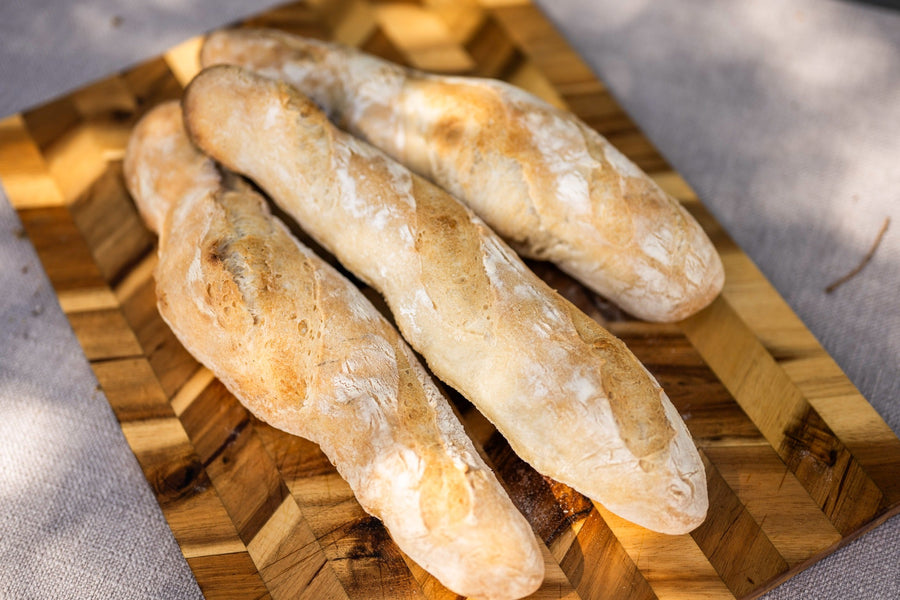 BakeEasy Homemade BaguettesFresh bread, a crisp crust and butter melting into the middle. These easy homemade bagu...
View recipe
BakeEasy Homemade BaguettesFresh bread, a crisp crust and butter melting into the middle. These easy homemade bagu...
View recipe
-
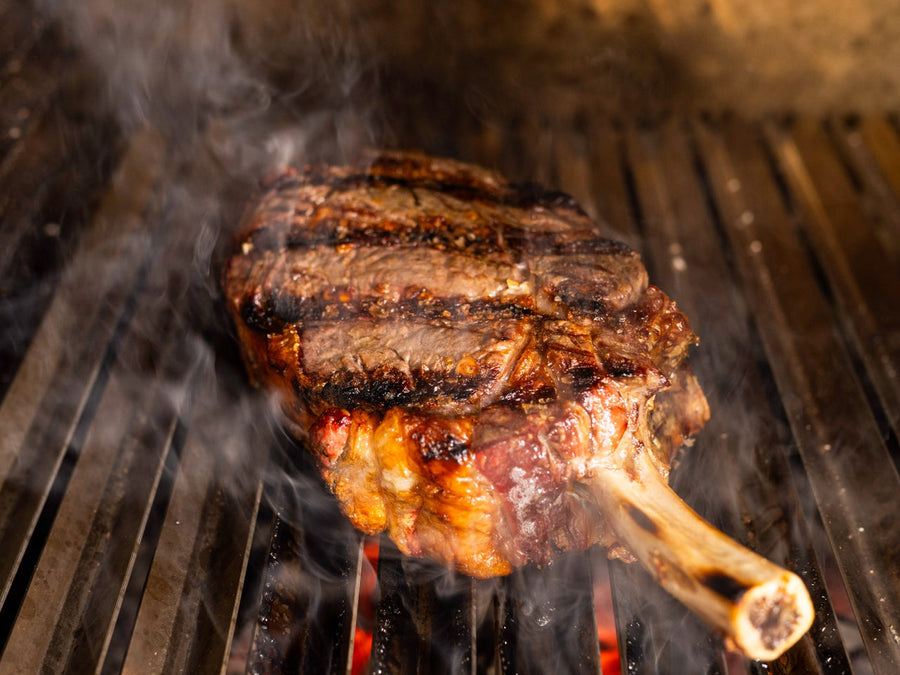 BeefCharcoal Grilled Ribeye Steak on the Argentine GrillA thick ribeye on the bone, a hot Argentine grill and a little sea salt. That is a very...
View recipe
BeefCharcoal Grilled Ribeye Steak on the Argentine GrillA thick ribeye on the bone, a hot Argentine grill and a little sea salt. That is a very...
View recipe
-
 GrillPrawns with Chilli, Garlic and LemonShell-on prawns hit the hot plancha and the smell of garlic and toasting shell drifts o...
View recipe
GrillPrawns with Chilli, Garlic and LemonShell-on prawns hit the hot plancha and the smell of garlic and toasting shell drifts o...
View recipe

The cook

Neil Quick
Co-founder, Charlie Oven
Neil Quick is co-founder of Charlie Oven and happiest when he’s cooking over charcoal. He loves trying new ideas, feeding a crowd and making the kind of food everyone wants to tuck into.
More recipes by Neil QuickFrequently asked questions
-
How long does a hanging leg of lamb take in Charlie?
-
How do I hold a low, steady temperature for the lamb?
-
What wood should I use to smoke the lamb?
-
Can I leave out the five spice?