


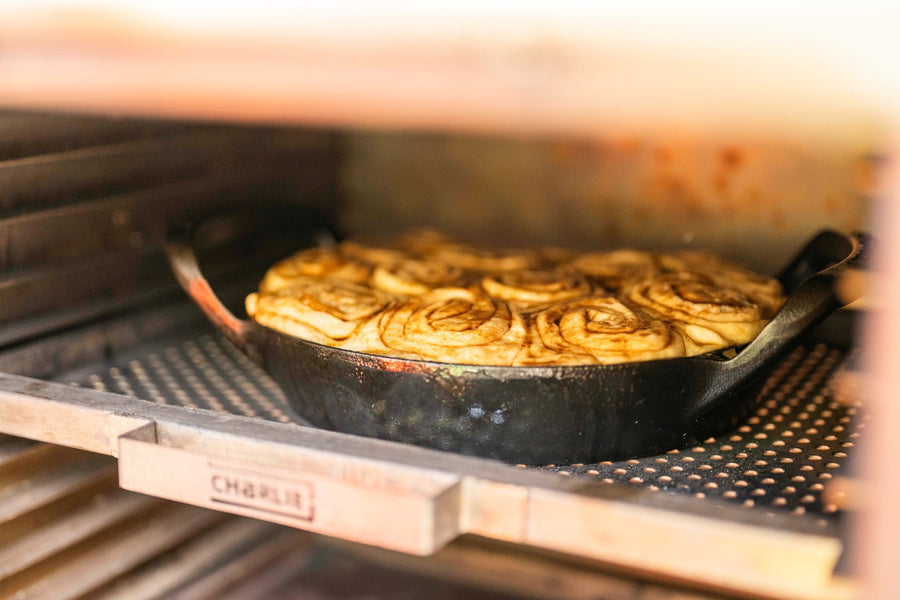
 BakeMilk Bread Cinnamon BunsSoft, pillowy milk bread wrapped around a swirl of cinnamon and brown sugar, finished w...
View recipe
BakeMilk Bread Cinnamon BunsSoft, pillowy milk bread wrapped around a swirl of cinnamon and brown sugar, finished w...
View recipe
Outdoor Cooking & Charcoal Oven Recipes / Bake

Cooked in the Charlie Charcoal Oven
Sourdough Loaf
Sourdough flavour with a little help from yeast. This small hybrid loaf is a friendly starting point for baking sourdough in Charlie, with a crisp crust and soft crumb. It still needs time to develop, but the method takes you through it.
Jay PorterGuest chef, Breads From Around The World
Oven temperature240°C (465°F)
RackPizza stone on the Charlie Oven Cooking Rack
CharcoalAbout half a football of good quality lumpwood charcoal
Ingredients
Serves 1 small loafScale
Equipment
Everything used in this recipe. Already have Charlie? Add the accessories in one go.
-
 Charlie Oven Cooking Rack$462.00
 -
 Charlie Charcoal Oven$9,797.00Choose your oven, Charlie Charcoal Oven
Method
Cook Mode
Stops your screen going dark while you follow along.
Setting up Charlie
- Mix the dough: In a large bowl combine the water, sourdough starter and yeast, stirring to loosen the starter. Add the flour and salt and mix until no dry flour remains. The dough will look shaggy and slightly sticky.
- Rest: Cover the bowl and leave the dough to rest for 20 minutes so the flour hydrates fully.
- Stretch and fold (first set): With damp hands, lift one side of the dough, stretch it gently and fold it over the centre. Turn the bowl a quarter turn and repeat until you have folded all four sides.
- Rest: Leave the dough to rest for 20 minutes.
- Stretch and fold (second set): Repeat the same stretch and fold process again, then rest the dough for another 20 minutes.
- Coil fold: Slide both hands under the centre of the dough, lift it up so it stretches, then lower it so the ends tuck underneath. Turn the bowl 90 degrees and repeat once more.
- Bulk fermentation: Leave the dough at 20 to 22°C (about 70°F) until it rises by about 60 to 70%, looks slightly domed and feels airy. This usually takes 2½ to 3½ hours.
- Pre-shape: Tip the dough onto a lightly floured surface and gently form it into a loose round. Leave it to rest for 15 minutes.
- Final shape: Shape the dough into a tight boule or oval and place it seam side up in a well-floured banneton.
- Final proof: Leave at room temperature for 45 to 75 minutes until slightly puffy, or refrigerate for 8 to 16 hours for a cold proof.
- Score and bake: Turn the dough onto a peel or floured board, score with a sharp blade and lightly mist with water. Bake on the hot stone for 20 minutes.
- Finish baking: Check the crust and bake for up to 10 minutes more until deep golden brown. Move to a higher rack if it is browning too quickly.
- Cool: Remove the loaf and allow it to cool completely on a wire rack before slicing.
Tips
More recipes
-
 BakeMilk Bread Cinnamon BunsSoft, pillowy milk bread wrapped around a swirl of cinnamon and brown sugar, finished w...
View recipe
BakeMilk Bread Cinnamon BunsSoft, pillowy milk bread wrapped around a swirl of cinnamon and brown sugar, finished w...
View recipe
-
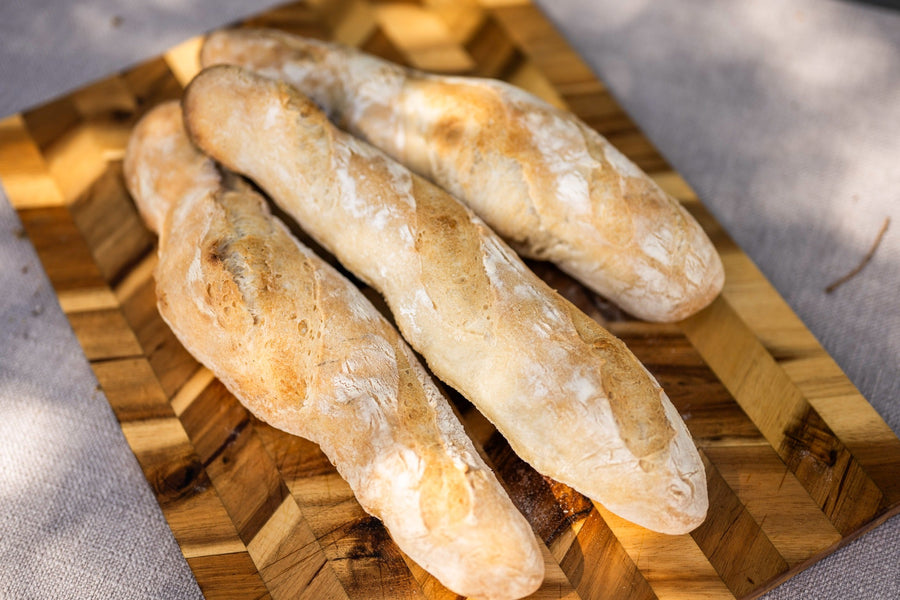 BakeEasy Homemade BaguettesFresh bread, a crisp crust and butter melting into the middle. These easy homemade bagu...
View recipe
BakeEasy Homemade BaguettesFresh bread, a crisp crust and butter melting into the middle. These easy homemade bagu...
View recipe
-
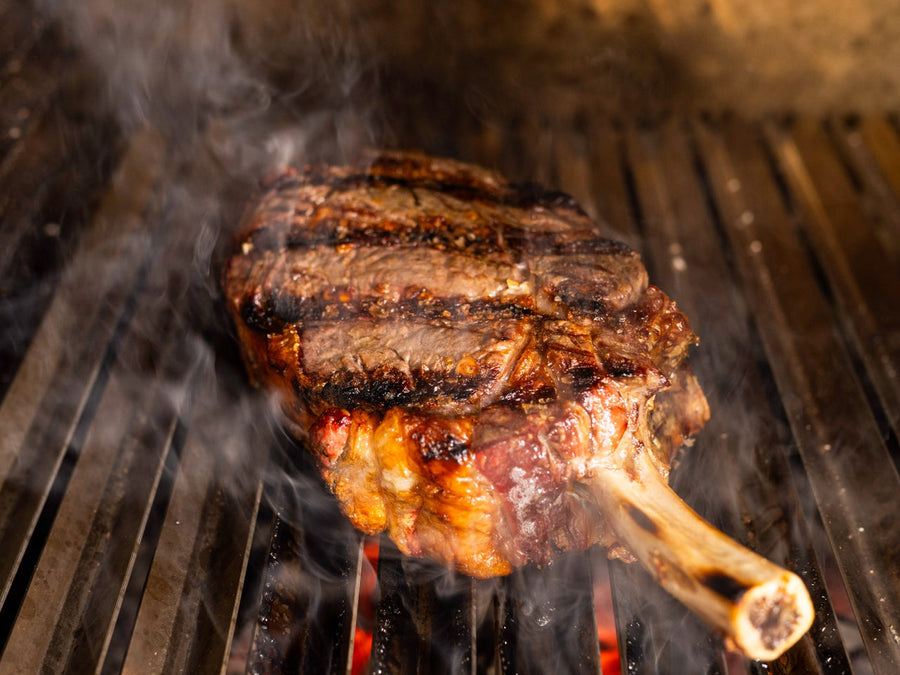 BeefCharcoal Grilled Ribeye Steak on the Argentine GrillA thick ribeye on the bone, a hot Argentine grill and a little sea salt. That is a very...
View recipe
BeefCharcoal Grilled Ribeye Steak on the Argentine GrillA thick ribeye on the bone, a hot Argentine grill and a little sea salt. That is a very...
View recipe
-
 GrillPrawns with Chilli, Garlic and LemonShell-on prawns hit the hot plancha and the smell of garlic and toasting shell drifts o...
View recipe
GrillPrawns with Chilli, Garlic and LemonShell-on prawns hit the hot plancha and the smell of garlic and toasting shell drifts o...
View recipe

The cook
Jay Porter
Guest chef, Breads From Around The World
Jay Porter led our Breads From Around The World masterclass at Charlie, baking his way across four cuisines in a single session. From Georgian khachapuri to Turkish pide and soft challah buns, his recipes show what a charcoal oven can do with dough.
More recipes by Jay PorterFrequently asked questions
-
What temperature should Charlie be for sourdough?
-
Can I prove the sourdough overnight in the fridge?
-
How do I get a good rise and crust on my loaf?
-
Why does this sourdough recipe use yeast as well?